 benchr
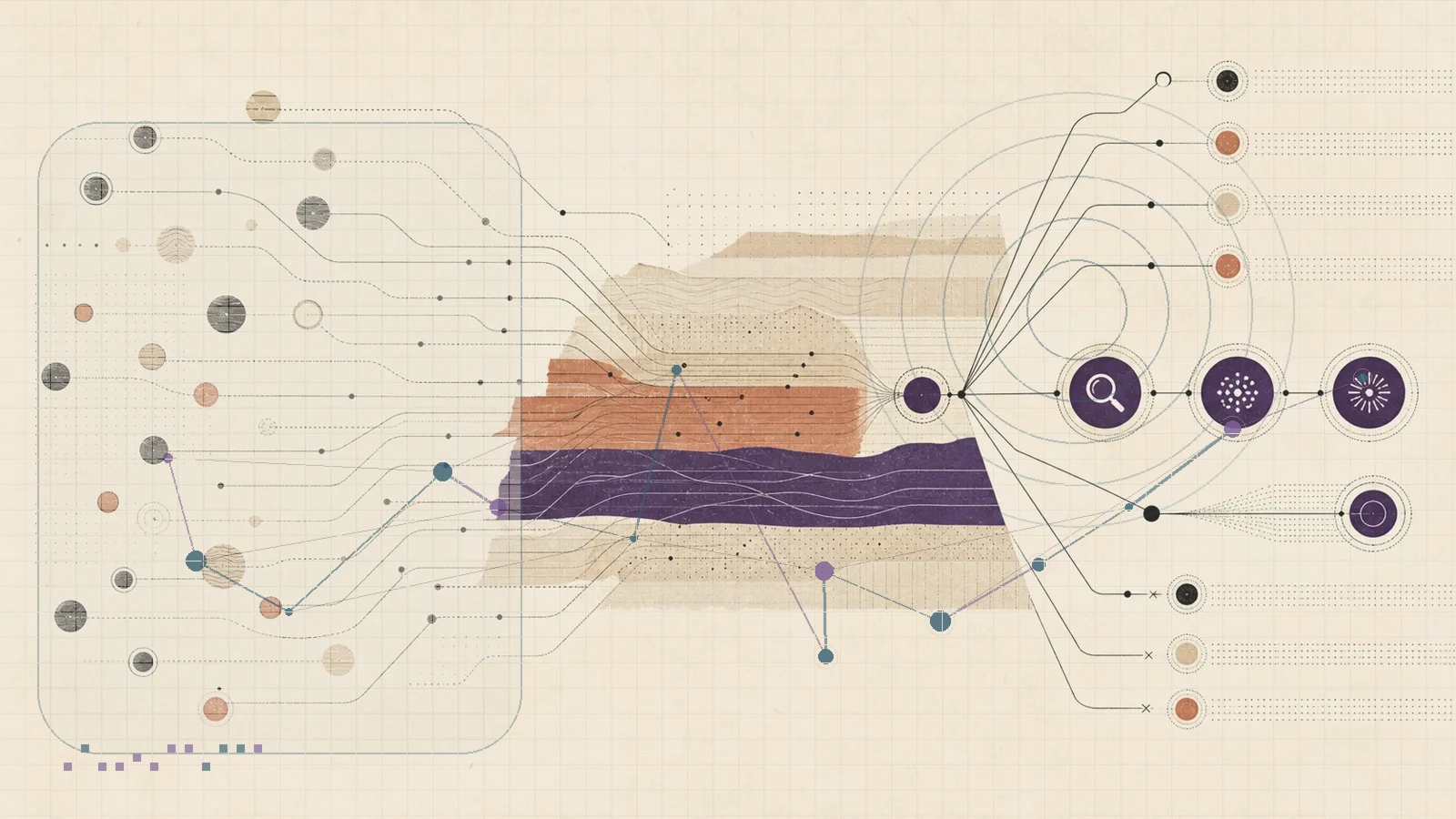
In a supported ChatGPT shopping flow, a request such as "find me a pair of running shoes under sixty bucks, size 10, gray" can surface a participating product and a checkout control. You confirm the size and total before the order is submitted. Tokenization is designed to limit exposure of the underlying card number, but it does not remove merchant, account, or operational risk.
That loop, from a request to a confirmed purchase with fewer manual checkout steps, is what people mean by agentic shopping. Some flows moved beyond demos in the dated launches below, but coverage remains provider-, merchant-, region-, and account-dependent.
One purchase, start to finish
Here's the path your shoe order takes inside ChatGPT's Instant Checkout, which OpenAI announced on September 29, 2025. The assistant surfaces a product from a participating merchant. You hit buy. Behind the scenes, Stripe issues what it calls a Shared Payment Token, scoped to that one merchant and that one cart total. The token lets ChatGPT kick off the payment without handing your card number to the seller. The merchant keeps control of the order, and OpenAI doesn't become the store.
In its September 29, 2025 announcement, OpenAI said Instant Checkout started with U.S. Etsy sellers and described more than one million Shopify merchants—along with brands including Glossier, SKIMS, Spanx, and Vuori—as planned future coverage. That was a historical launch statement, not confirmation that every named or counted merchant later became available. Check the current ChatGPT and merchant documentation for live eligibility. The announcement also described single-item purchases first, with multi-item carts and more regions on the roadmap, using the open Agentic Commerce Protocol co-developed with Stripe.
Google goes the other direction on who pulls the trigger. In Google's AI Mode, shown at I/O on May 20, 2025, you tap "track price" on a product and set your size, color and a target price. When the price drops, you get a nudge, and you tap "buy for me." At that point Google itself adds the item to your cart on the retailer's own site and completes checkout with Google Pay. The broader rollout landed on November 13, 2025 with merchants like Wayfair, Chewy, Quince and select Shopify stores. Google's whole catalog here rides on its Shopping Graph, which it says holds more than 50 billion product listings. The company is firm that it asks permission first and only buys after you confirm the details.
So even at the "find me X to a charged card" extreme, there's a human yes in the loop. That gate is the single most important design choice in this whole category, and it's the thing to watch as agents get more autonomous. The trajectory matches what benchr traced in its look at where AI agents landed after eighteen months: the capability is real, but the guardrails are doing quiet, load-bearing work.
Who's wiring up the checkout
Four assistant providers announced or launched distinct checkout models in the dates below, and two payment networks announced supporting rails. The table is a historical snapshot, not a claim that every flow remains available to every user today.
| Player | What it does | How your card is handled |
|---|---|---|
| OpenAI, Instant Checkout (Sept 29, 2025) | The announcement described U.S. Etsy sellers at launch and Shopify expansion as planned; verify current merchant eligibility. | Stripe Shared Payment Token, scoped to one merchant and cart total |
| Google, AI Mode checkout (I/O May 20, 2025; rollout Nov 13, 2025) | "Track price," then "buy for me"; Google adds to your cart on the retailer's site and pays. | Google Pay, after you confirm the details |
| Amazon, Buy for Me (beta, Apr 8, 2025) | Agent leaves Amazon and checks out on other brands' sites when Amazon doesn't sell the item. | Encrypted name, address and payment details; brand handles fulfillment and returns |
| Perplexity, Buy with Pro (Nov 2024) | One-click buy inside Perplexity for U.S. Pro users; free merchant program, free shipping. | Saved billing once; PayPal and Venmo added via the May 2025 PayPal deal |
| Visa, Intelligent Commerce (Apr 30, 2025) | Opens Visa's network to agent developers. Partners include OpenAI, Anthropic, Microsoft, Perplexity, Stripe. | Tokenized "AI-ready" cards, payment passkeys, spending limits |
| Mastercard, Agent Pay (Apr 29, 2025) | Agentic payments for AI assistants. Partners: Microsoft, IBM, Braintree, Checkout.com. | Mastercard Agentic Tokens built on its Payment Passkeys |
A few things jump out. Perplexity got there first, with Buy with Pro back in November 2024, where U.S. Pro subscribers save their billing once and buy select products without leaving the app. The merchant program is free to join and includes free shipping, and a May 2025 PayPal partnership added PayPal and Venmo as checkout options. It's the tightest model: a confirmed cart, one click, done.
Amazon's Buy for Me, in beta since April 8, 2025, is the spiciest of the bunch. When you want something Amazon doesn't sell, its agent goes out to the brand's own website and completes checkout there using your encrypted name, address and payment details. Under the hood it runs on Amazon Bedrock with Amazon's Nova models and Anthropic's Claude. The catch worth knowing: the brand, not Amazon, handles fulfillment, delivery, returns and customer service. Amazon hands off the order and the support burden lands somewhere else.
Both payment networks moved within a day of each other. Mastercard unveiled Agent Pay on April 29, 2025, with Mastercard Agentic Tokens built on its tokenization and Payment Passkeys, and launch partners Microsoft, IBM, Braintree and Checkout.com. Visa followed on April 30 with Intelligent Commerce, opening its network to agent developers through tokenized "AI-ready" cards, passkeys and spending controls, with OpenAI, Anthropic, Microsoft, Perplexity and Stripe among its partners. The pattern across all of it is the same: tokenize the card, gate the purchase behind a confirmation.
The card is the safe part. The judgment is the risky part.
Where it goes wrong
Now the honest section. The payment rails are the most reassuring piece here, and that's a little counterintuitive. Stripe's Shared Payment Token, Visa's tokens, Mastercard's Agentic Tokens, all of them are built so your real card number never reaches the merchant or sits in the agent's hands. If your fear is a leaked card, these designs are aimed squarely at it. That's not where the trouble lives.
Prompt injection is the one that should keep these teams up at night. An agent reads web pages to do its job, and some of those pages aren't friendly. A seller, or someone who compromised a listing, can hide text that reads to a human like product copy but reads to an agent like a command. The more autonomy you grant, the bigger that attack surface gets. This is the same data-exposure question benchr digs into in its piece on which AI providers train on what you tell them, only here the stakes include your payment details, not just your chat history.
Then there's the mundane failure that'll bite most people: the wrong thing shows up. Returns across these services are handled by the merchant or the brand, not the AI company. Google's pitch leans hard on the confirmation gate precisely because it limits this, you confirm size, color and shipping before anything ships. But confirmation only helps if you read it. An agent that's right 95% of the time still buys the wrong shoe one order in twenty, and you're the one mailing it back.
The friction isn't just technical, either. Some retailers publicly objected to Amazon's Buy for Me listing their products without permission, a reminder that agentic shopping reshuffles who controls the storefront, and not everyone whose store is involved signed up for it. That tension sits right next to what's happening in search, where AI answers keep users from ever clicking through. benchr covered the fallout in its piece on what zero-click search did to the web. Checkout is the next surface where the agent stands between you and the business, and the business has feelings about it.
The verdict, for now
Go ahead and use agentic checkout for low-stakes, well-specified buys, a known product, a clear size, a price you're fine paying. The token plumbing means you're not risking your card, and the confirmation step means you're not handing over the keys. That's a reasonable trade for skipping the checkout grind on Etsy or a Shopify store.
Skip it for anything where the wrong call is expensive or annoying to unwind, big-ticket items, anything with a tight return window, anything where you'd want to compare three options before committing. And keep reading the confirmation screen every single time. As these agents start remembering your preferences and acting with less prompting, which benchr explores in its look at how persistent memory changes what assistants do, that human yes is the one habit worth keeping. The agent is fast. You're the part that's accountable.
Frequently asked
How does AI shopping checkout work?
The agent finds a product, you confirm, and it pays with a token that hides your card from the store. In ChatGPT's Instant Checkout, the merchant stays in control and Stripe's Shared Payment Token, scoped to one merchant and cart total, completes the sale without exposing your card. In Google's AI Mode you tap "buy for me" and Google adds the item to your cart on the retailer's site and pays with Google Pay. Amazon's Buy for Me sends its agent out to the brand's own site with your encrypted details.
Is it safe to let an AI agent buy something for me?
Mostly, with caveats. The payment side is built to be safe: Stripe's Shared Payment Token and the new Visa and Mastercard agent tokens are designed so your real card number never reaches the merchant or the agent. The risks are practical, not card theft. An agent can buy the wrong item or duplicate an order, hostile product pages can try prompt injection to trick it, and returns fall to the merchant, not the AI company. Most services also make you confirm before they buy.
Which agentic-checkout launches are documented here?
This page records dated announcements from four providers. OpenAI announced Instant Checkout on September 29, 2025 with U.S. Etsy sellers at launch and described more than one million Shopify merchants as planned future coverage; that statement does not confirm current availability, so check the live product. Google showed AI Mode checkout on May 20, 2025 and announced a broader November 13 rollout with named merchants and select Shopify stores. Amazon's Buy for Me entered beta on April 8, 2025, and Perplexity announced Buy with Pro in November 2024. Mastercard and Visa announced agentic-payment programs in late April 2025.
What happens if the agent buys the wrong thing?
Returns and support fall to the merchant or brand, not the AI company. With Amazon's Buy for Me, the brand handles fulfillment, delivery, returns and customer service. Google says it asks permission and only buys after you confirm the size, color and shipping details, which limits wrong-item buys but doesn't settle the liability question when an agent acts on its own. The confirmation gate is your main protection, so read what's in the cart before you approve it.
Changelog
- July 23, 2026 — Recast the “one million Shopify merchants coming soon” wording as a September 2025 historical announcement and added a requirement to verify current provider and merchant availability.
- May 30, 2026 — Originally published. Launch dates, partners and token mechanics checked against Stripe, Google, Visa, Mastercard and trade-press announcements.
References
- Stripe, "Stripe and OpenAI launch Instant Checkout," stripe.com, accessed May 2026.
- Google, "Agentic checkout for holiday AI shopping," blog.google, accessed May 2026.
- TechCrunch, "Google adds AI-powered shopping features for discovery and easy check-out," techcrunch.com, accessed May 2026.
- Perplexity, "Shop like a Pro," perplexity.ai, accessed May 2026.
- Digital Commerce 360, "Amazon Buy for Me agentic AI shopping tool," digitalcommerce360.com, accessed May 2026.
- PYMNTS, "Visa powers AI shopping agents with Intelligent Commerce payment rails," pymnts.com, accessed May 2026.
- Visa, "Visa Intelligent Commerce," usa.visa.com, accessed May 2026.
- Mastercard, "Mastercard Unveils Agent Pay," mastercard.com, accessed May 2026.