 benchr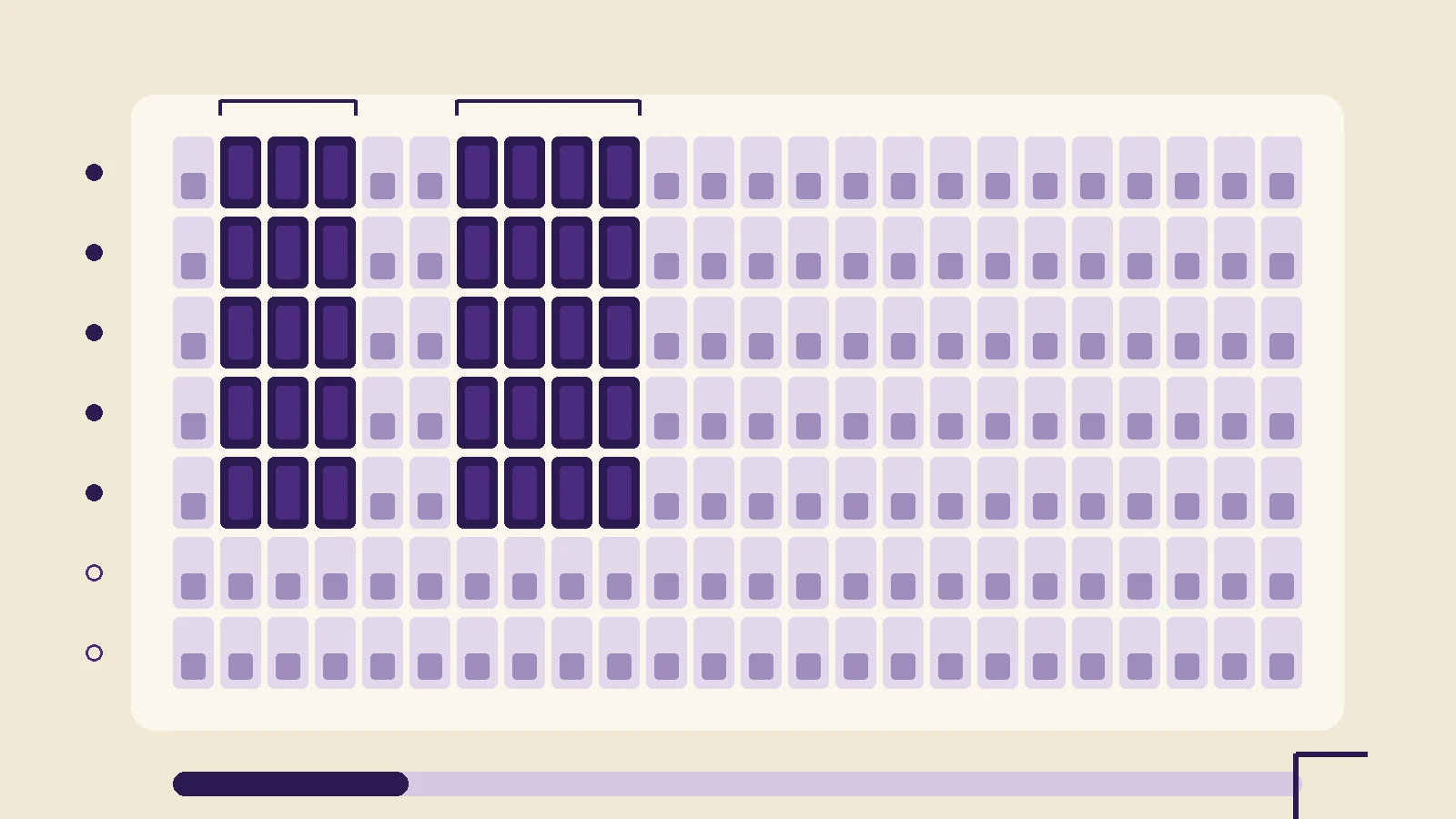
Most price changes are one number moving. This one changed the shape of the bill. DeepSeek spent 2026 as the reference point everyone quoted when arguing that frontier-grade output had become nearly free, and the argument rested on a single flat figure: $0.28 per million output tokens on V4-Flash. That figure is gone. In its place are two figures and a schedule, and the schedule is the part worth reading carefully.
What the rate card says now
DeepSeek's pricing page lists three models under one scheme. The experimental vision checkpoint published on August 21 carries the same rates as V4-Flash.
| Model | Was, flat | Peak | Off-peak | Rise at peak |
|---|---|---|---|---|
| V4-Flash input | $0.14 | $0.44 | $0.22 | 3.1× |
| V4-Flash output | $0.28 | $1.32 | $0.66 | 4.7× |
| V4-Flash cache hit | $0.0028 | $0.014 | $0.007 | 5.0× |
| V4-Pro input | $0.435 | $1.32 | $0.66 | 3.0× |
| V4-Pro output | $0.87 | $3.96 | $1.98 | 4.6× |
| V4-Pro cache hit | $0.003625 | $0.044 | $0.022 | 12.1× |
The row highlighted at the bottom is the one that will surprise people. Cache-hit input on V4-Pro rose about twelvefold. As a proportion of the cache-miss rate it is unchanged, still around 97% off, so the caching advice everyone gives is still correct. But teams that built long system prompts on the assumption that cached tokens were free are now paying a real, if small, number for something that used to round to zero.
Which hours are peak, and who they hit
Peak is 01:00 to 04:00 and 06:00 to 10:00 UTC, Monday through Friday. That is seven hours a day across five days: 35 hours out of a 168-hour week, or a little under 21%. The remaining 79% of the week, including every weekend hour, bills at half. That share is our arithmetic from DeepSeek's published hours, not a DeepSeek figure.
Stated that way it sounds generous, and for some workloads it is. The problem is where the window sits. 06:00 to 10:00 UTC is the European working morning and the Chinese and South Asian afternoon. 01:00 to 04:00 UTC catches the East Asian working morning. DeepSeek has not picked arbitrary hours; it has picked the hours when its own inference capacity is contended, which are the same hours when an application serving those regions is busiest.
What it costs on a real workload
Take a service consuming 60M input and 20M output tokens a month on V4-Flash. Under the old flat rate that was $8.40 plus $5.60, or $14.00. Under the new scheme the answer is a range, and where you land in it is a scheduling decision rather than a pricing one.
The gap between the second and fourth bars is the whole point of the scheme: a factor of two, available to anyone whose work can wait. But notice the first bar. Even the best case is 1.9 times the old bill. There is no configuration of your system that returns you to what you were paying in July.
What this does to the cheap tier
DeepSeek V4-Flash held the lowest listed hosted rate in the set benchr tracks for most of this year. It no longer does at peak, and the models that pass it are not obscure ones. Here is where the budget tier actually stands.
| Model | Provider | Input | Output | Condition |
|---|---|---|---|---|
| GLM-5.3-Flash | Z.ai | $0.075 | $0.25 | Launch promotion, ends September 9, 2026. List is $0.15 / $0.50 |
| GPT-5.6 Luna | OpenAI | $0.20 | $1.20 | Flat, since the July 30 cut |
| DeepSeek V4-Flash | DeepSeek | $0.22 | $0.66 | Off-peak only, 79% of the week |
| GPT-5 Mini | OpenAI | $0.25 | $2.00 | Flat |
| MiniMax M3 | MiniMax | $0.30 | $1.20 | Flat |
| Gemini 3.5 Flash-Lite | $0.30 | $2.50 | Flat | |
| DeepSeek V4-Flash | DeepSeek | $0.44 | $1.32 | Peak window |
Two readings fall out of that. If your traffic is schedulable, DeepSeek is still excellent and the off-peak row is genuinely cheap for a model reporting 79% on SWE-bench Verified. If your traffic is interactive, MiniMax M3 now undercuts V4-Flash on both sides of the meter at every hour, and does it without asking you to think about UTC at all. That last point has a cost of its own: a rate that never changes is worth something to a finance team, and DeepSeek just spent some of that goodwill.
The newest entry is the one to watch rather than adopt. Z.ai published GLM-5.3-Flash on August 26 under an MIT licence, and at even its post-promotion list rate of $0.15 and $0.50 it undercuts everything in the table. benchr records it in the verified ledger but has not put it in the tool layer that feeds the cheapest-API leaderboard, because a model two days old with three provider-published benchmark numbers has not earned a capability score yet. Price it, test it, and do not migrate production on the strength of a launch post.
What to do this week
- Find out what fraction of your traffic is already off-peak. Bucket last month's request timestamps into the two windows before you change anything. Plenty of teams outside Asia and Europe will discover most of their volume already falls in the cheap 79% and that their bill rose by 1.9 times rather than 4.7.
- Move the work that can move. Batch jobs, embeddings refreshes, evaluation runs, and nightly summarisation are all cron entries. Shifting them out of 01:00 to 04:00 and 06:00 to 10:00 UTC halves their line on the invoice for the price of one scheduler change.
- Re-price the interactive path honestly. For a user-facing feature, budget at the peak rate. Model your real mix in the cost calculator using $0.44 and $1.32 rather than a blended average, then compare that number against the flat-rate alternatives above.
- Re-check the cache maths. Cached input is still about 97% below the cache-miss rate, so caching still buys you more than any other single change. But on V4-Pro the absolute figure moved from $0.003625 to $0.044, so a very large warm prefix is now a line item rather than a rounding error. The V4-Pro pricing page works a 100K-token prompt through both rates.
- Do not re-derive the self-hosting case from this alone. The weights are still MIT-licensed and unaffected by any of this. A three-fold API rise moves the break-even point, but GPU capacity, utilisation, and the engineers who operate it did not get cheaper on August 16. Our review of DeepSeek V4 covers what that trade actually involves.
The wider pattern
August was a month of loud discounts. OpenAI cut GPT-5.6 Sol to $4 and $20 on August 21, Google halved Gemini 3.6 Flash through the end of the year, and Z.ai launched GLM-5.3-Flash at half of its own list price. DeepSeek moved the other way, and did it quietly, in a changelog entry rather than a launch post.
What connects them is that all four rates carry conditions: a promotional end date, an introductory window, or a clock. Very little of the current price sheet is a durable number, which is the argument for keeping a dated record rather than a current-price page. If you want the version of these figures that will still be checkable in a year, that is what price history is for, and what the DeepSeek versus OpenAI comparison now has to say twice over.
FAQ
What are DeepSeek's peak hours?
01:00 to 04:00 and 06:00 to 10:00 UTC, Monday through Friday, per the official pricing page. Every other hour of the week, including all of Saturday and Sunday, is off-peak and bills at exactly half the peak rate.
How much did DeepSeek's prices actually go up?
At the peak rate, V4-Flash input rose 3.1 times and output 4.7 times; V4-Pro input rose 3.0 times and output 4.6 times. At the off-peak rate the rises are half of those, so between 1.5 and 2.4 times. Cache-hit input rose most: 5 times on V4-Flash and about 12 times on V4-Pro at peak.
Is DeepSeek still the cheapest API?
Only outside the peak window, and only within the set benchr tracks. At $0.22 and $0.66 off-peak, V4-Flash is still cheaper than GPT-5 Mini, MiniMax M3, and Gemini 3.5 Flash-Lite. At its $0.44 and $1.32 peak rate, all three of those undercut it on at least one side of the meter. GLM-5.3-Flash, released August 26, lists below all of them but is too new to have a benchr capability record.
Does the price change affect self-hosting?
No. DeepSeek publishes V4-Flash and V4-Pro weights under the MIT licence and the API rate has no bearing on that. It does move the break-even point at which running your own capacity beats paying per token, so a self-hosting calculation done before August 16 is worth redoing with the new numbers.
Sources
- DeepSeek, Models & Pricing — source for every peak and off-peak rate in this article, the definition of the peak window, the context and output limits, and the inclusion of
deepseek-v4-flash-vision-expat V4-Flash rates. Verified August 28, 2026. - DeepSeek, API changelog — establishes the August 13, 2026 V4-Pro general-availability update and the August 21, 2026 publication of the experimental vision checkpoint, with DeepSeek's own benchmark tables for both. Verified August 28, 2026.
- DeepSeek, API pricing update announcement — the provider's own statement that the new pricing took effect at 16:00 UTC on August 16, 2026 and that off-peak rates are 50% below peak. Used only for the effective time; the rates themselves come from the pricing page above. Verified August 28, 2026.
- Z.ai, GLM pricing — source for the GLM-5.3-Flash list and promotional rates and the September 9, 2026 promotion end date. Verified August 28, 2026.
- benchr, model-figures.json — the verified ledger holding the GPT-5.6 Luna, GPT-5 Mini, MiniMax M3, and Gemini 3.5 Flash-Lite rates used in the comparison table, each with its own provider source and verification date.
Evidence boundary. Every rate here is a provider-published list price read on the dates shown. The 79% off-peak share, the multipliers, and the monthly workload figures are benchr calculations from those rates, not provider figures. The SWE-bench result quoted for V4-Flash is DeepSeek's own model-card number; benchr has not reproduced it. No first-party latency, throughput, or quality testing was performed for this article.
Changelog
August 28, 2026: Published after a re-read of DeepSeek's pricing page showed the V4 line moved to peak and off-peak billing on August 16, 2026, a change benchr's August 24 pass did not catch.